Saturday, July 21, 2012

WHAT IS OLD WINE?

Depends on perception and taste. For some it means 10, 20 or 25 years old wine. For some 100 and over. The fact is majority of today's wines are not intended to be kept longer than couple of years. Most of them are made differently than 20-30 years ago. It greatly depends from which grapes wine is made, will it age properly and partly how it is kept. People still keep their wine and think it will improve with years. When opening the bottle they are mostly disappointed. Their wine isn't good. Honestly said, I've never had an excellent 20 years old wine. It's no problem someone is keeping it for fun and curiosity. When someone invests lots of money in worthless old wine, it can be a problem.
Something mythical about old wine persist. 100 years old bottles and older of renowned wineries reach astronomical prices. Most of them are French, sometimes Italian. I've never heard such old wine tastes excellent, or even better than much younger one. It is the journey to unknown. Like one of almost forgotten Captain Kirk and his crew.
On one hand it would be interesting to know what exactly is happening in each wine bottle and when certain wine is best to drink. Knowing it unmistakeably, the mythical, excitement and interesting in old wine would most likely evaporate to thin air.
This Barolo was still good, even after 47 years. It's colour may be brownish, but otherwise in remarkably good condition with hint of acidity, smooth, barely port taste. Ten years ago this Barolo must have been excellent.
    

Monday, July 16, 2012

APRICOT TIME

These days almost everything comes from China. We may like it or not. But we don't think apricots originate from China. Most of us like them. They have been domesticated in Europe long time ago. As many Chinese products today even further around the globe. 
Apricots did very well this year in Vipava valley and Brda. 
Farming and forestry Institute Nova Gorica, it's branch in Ajdovščina organized a small apricot festival which took place in Planina by Ajdovščina for the first time on this scale. Over 30 apricot varieties grown in Vipava valley and Brda were on display, most of them available to taste. 15 apricot jams from different varieties, made by the same method offered an interesting tasting experience. Amazing what a difference, even greater as tasting apricots raw. Housewife association from Planina prepared a simple menu always using apricots as ingredient. I found tomato-apricot soup with herb croutons superb. Spicy apricot jam was my second favourite. 


probably not world longest pancake with apricot jam, but it wanished in no time

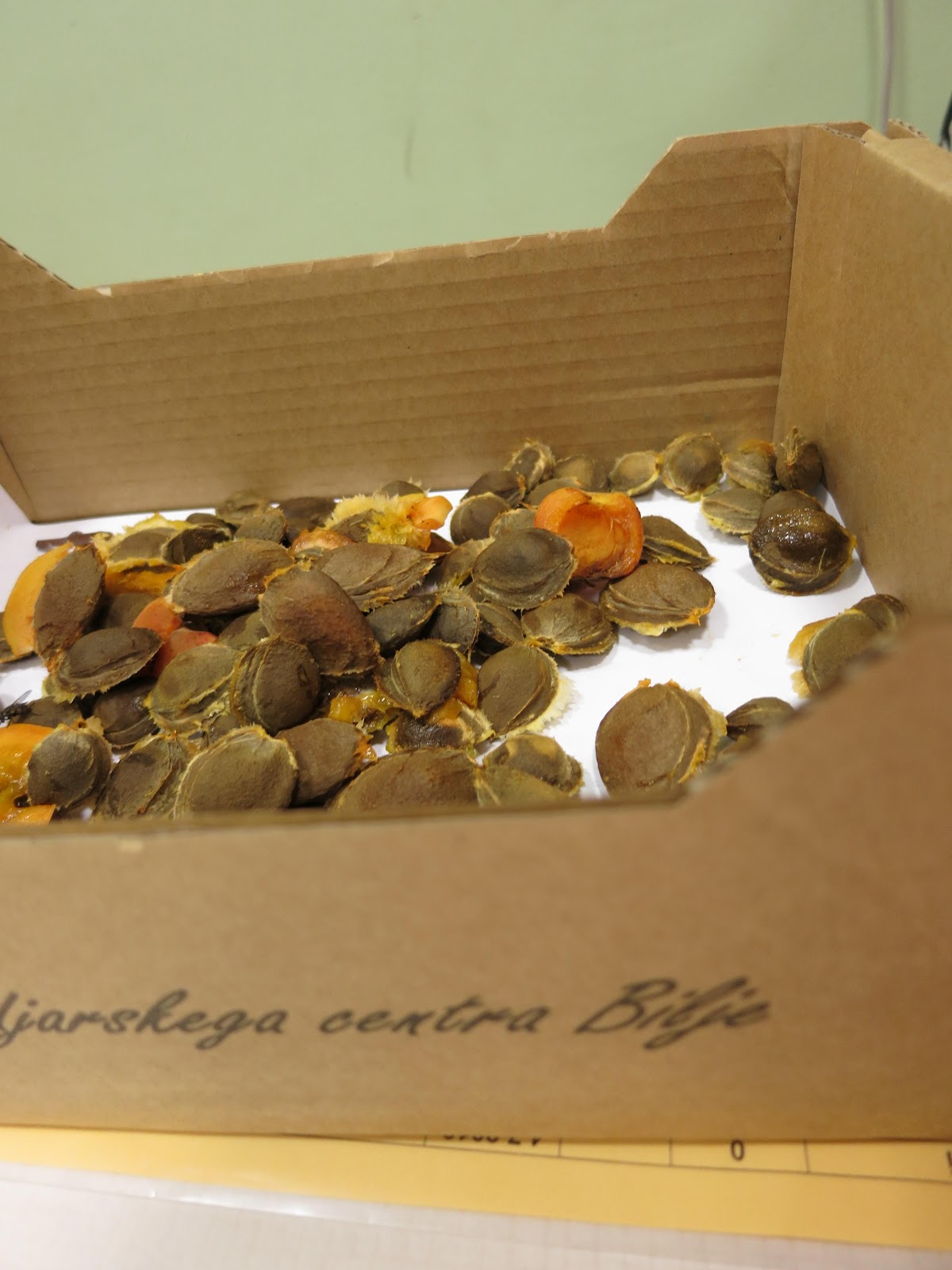
Apricot kernels are good source of vitamin B17
I hope next year this event will evolve to something even bigger and better promoted. In any case it is worth visiting and tasting. Apricots could give us so much more than just apricot jam or juice.

Tuesday, June 26, 2012

WE CAN DRINK MORE

Good news for all who like to drink wine! Or maybe it works with other alcoholic beverages also. Glass manufacturer Borgonovo from Italy invented new glass, which they claim reduces amount of alcohol we get into our blood by reducing carbon dioxide in the wine, up to 30%. I hope all wineries of the world would soon unite their forces to develop a glass which reduces the amount of alcohol in our blood up to 80, 90 or 100%. I'm sure this would boost their wine sale dramatically!
The new concept of drinking, cheers!

Sunday, June 17, 2012

DEVIN

Again, for the 6th year in a row. Magnificent scenery for wine and food lovers dedicated to Vitovska and seafood. The castle in Devin-Duino and it's garden north of Trst-Trieste. Beautiful weather contributed to atmosphere. 25 Vitovska winemakers and 20 restaurants with predominantly fish appetizers from Italian and Slovene Kras-Karst made each stop in castle's garden to delight. Well, at a point not so much, because the stands were stormed by the crowd. On the other hand stands would look sad, empty, no people around
Prior to wine tasting a lecture by M. Crespan about origin of Vitovska was held. Not a world's important grape, Vitovska (or better viticulturists and winemakers) managed to attract attention even in the USA. http://dinersjournal.blogs.nytimes.com/2010/07/13/the-wines-of-vitovska-grapes/  
  
Paying attention to environment and using natural (climatic) resources of Kras, some of viticulturists turned to organic wine production. Vitovska will probably newer be mass produced grape, it is good so.

http://www.themorningclaret.com/2011/friuli-carso-kante-skerk-zidarich/


Tuesday, June 12, 2012

ZELEN

Zelen, Pinela, Klarnica, Vitovska grganja, Rebula are considered indigenous and domesticated to Vipava valley. Zelen is the only indigenous vine of importance (in Vipava valley) as far as I know there are no written records or other sources it was brought from somewhere else. To determine it's origin and affiliation, genetic analysis has to be done. To my knowledge it hasn't been done yet. 
To achieve it's wider recognition first Zelen wine festival was organized in Vipava on Saturday 9th of June. 25 winemakers from Vipava valley offered Zelen samples to taste, from vintage 2011 to 1996. Zelen is a wine considered to be the best consumed about a year old for it's characteristic fragrance which diminishes quite rapidly with age. Tasting available samples surprised me; some wines up to four years old were still not far from what is recognized as typical Zelen. It's aroma is distinctive, complex, unlike any other wine, reminds a bit of fruity-with slight herbal note mix. Apparently the quality of Zelen depends even more than majority other wines from soil and weather conditions. Because of relatively low yield it wasn't popular vine to grow, till recently. In fact in the 80s it was on a brink of extinction with less than 2 hectares planted. In the year 2003 viticulturists who grow Zelen founded co-operative Zelen, which now has 20 members. To design special bottle for Zelen seems to be one of first priorities at that time. Currently there are about 60 hectares vineyards of Zelen in Vipava valley. With tradition and identity gaining importance also Zelen wine is more popular. To produce overall better Zelen wine more field research has to be done along with promotion here and abroad.
listening to opening speech

guided tasting in wine shop Vipava

in the year 1969 Mr.Potočnik was issued a reprimand by court for planting Zelen
             

Sunday, June 10, 2012

LATNIK

 
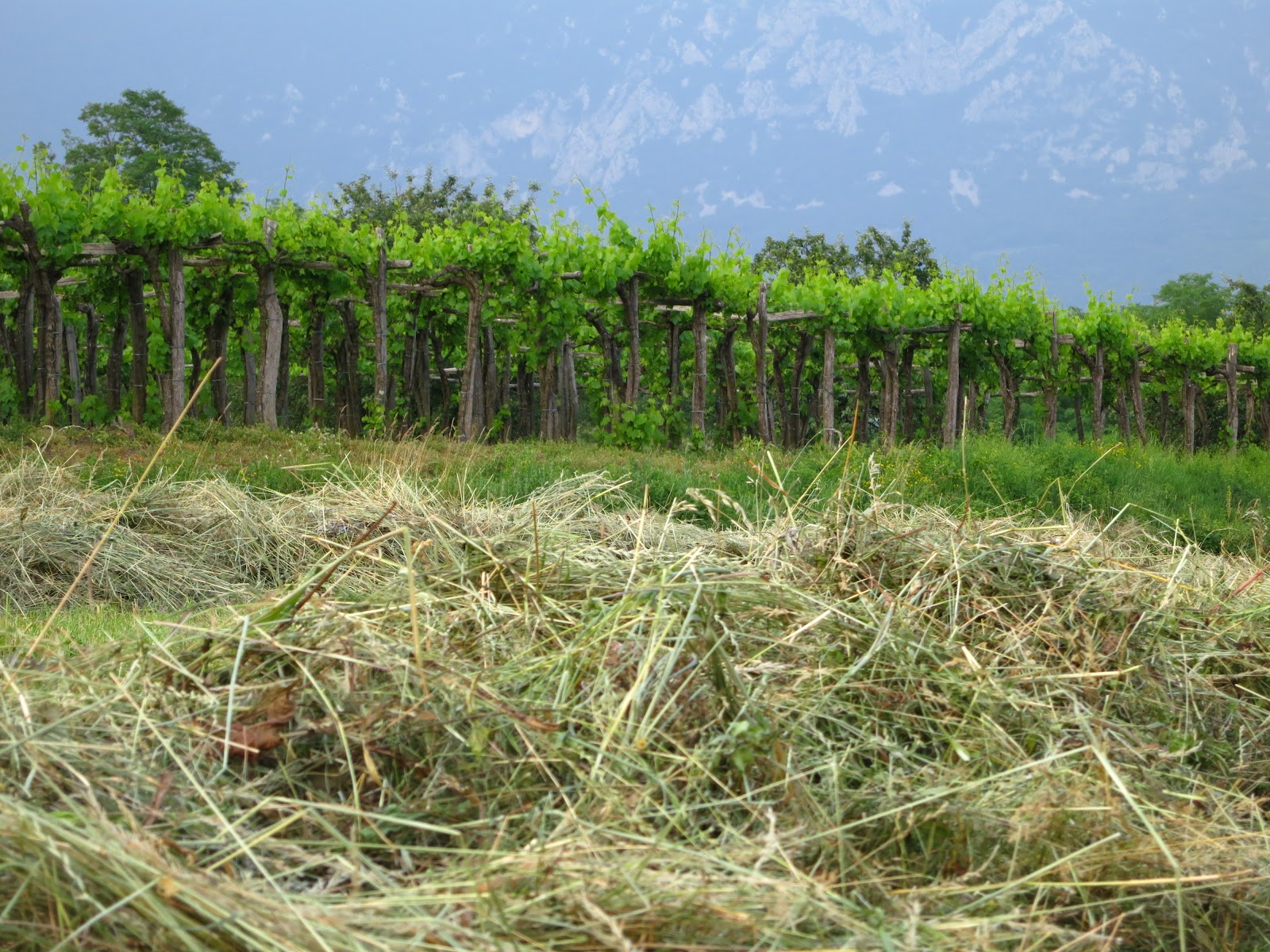
Latnik is the name of traditional trellis for vine growing in Karst and surrounding areas. It is Teran wine which most likely comes from traditional latnik in Karst. It is still in use in many places, but almost none are newly built. New vineyards are set with modern vine training system, to be easily cultivated with machines. They are also cheaper to build than traditional latnik. For centuries all the work in vineyard was done manually, therefore latnik was appropriate cultivation form. Why this form of trellis developed is not really clear. It is speculated it may be for protection against summer drought, for it casts shadow on ground and also protects grapes from summer sun. Grapes hang freely beneath the canopy. There is less work with pruning during the year.
There are variations of latnik, from light inclined to steeper and leveled post type.
Smaller vineyards with latnik system appear almost like art objects in landscape, especially in winter when it's wooden structure is not covered by leaves. 


Wednesday, June 6, 2012

BRDA

The most successful wine region in Slovenia is undoubtedly Brda. Numerous events linked to tradition, old and (re)invented, always is the connecting thread wine. Decades ago fruit production was the main source of income. Today it is wine and tourism. For this year's Cherry festival some wineries also opened their doors to public.

hospitality and natural wine at Janko Štekar's in Snežatno

tranquility at Štekar's pool
Šmartno
Šmartno
wine tasting spots at Šmartno

sparkling wine cellar Sirk-Bjana